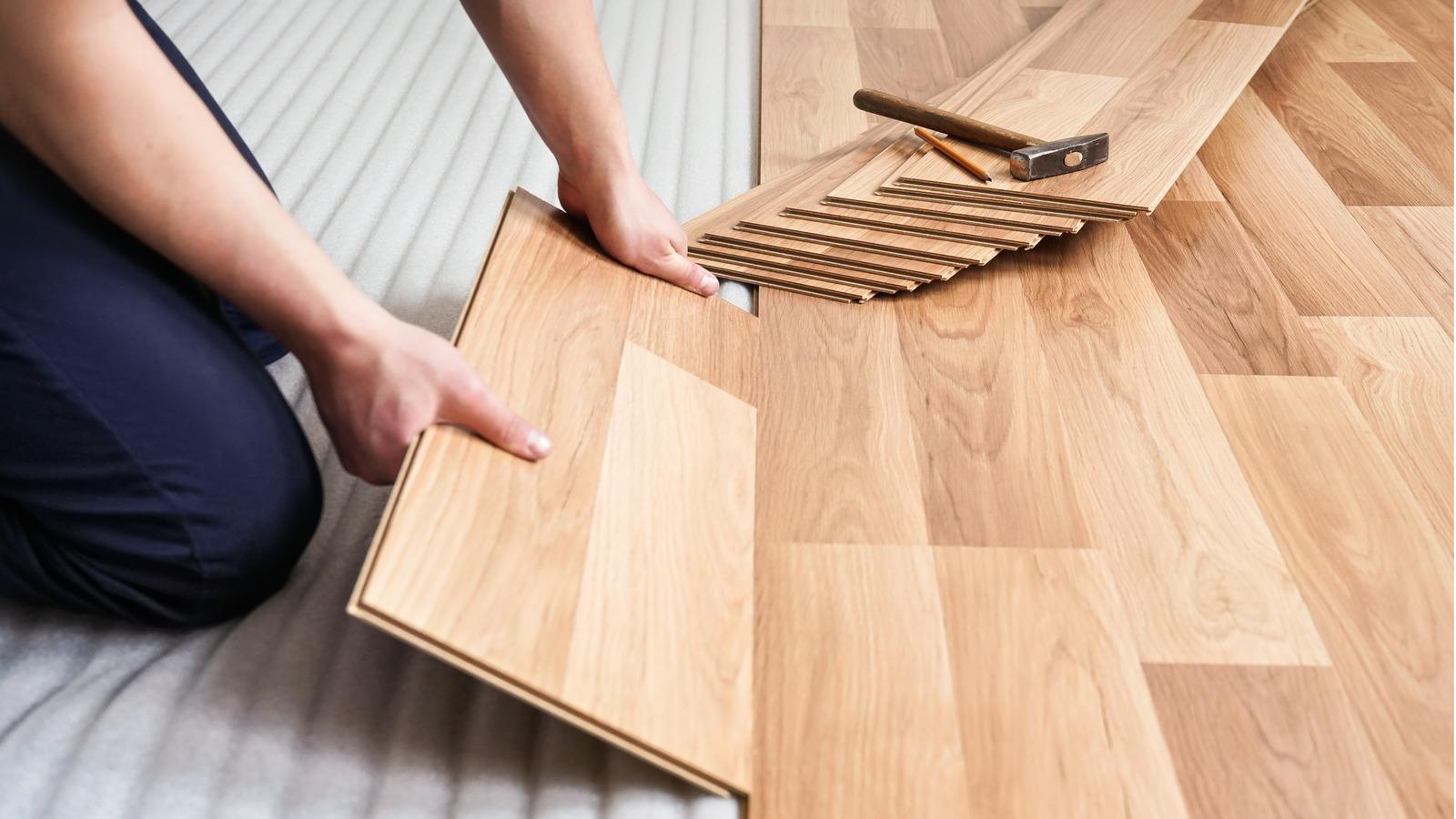
20 Best Suggestions For Picking Floor Installation
Why It Is Essential To Fix Subfloors Before Any Floor Is InstalledSubfloor repair is an unglamorous part of flooring installation that nobody likes to talk about -- and nobody wants to shell out money for. It's difficult to determine how the work was done and it's not a great photo and adds expense to an amount that homeowners have generally set as an exact number. Yet, it's without doubt, the key factor to determine if the floor is functioning right way or begins in the first year of its existence. The housing stock in Philadelphia including rowhomes, twins, colonial buildings older than Bucks County, Delaware County ranches with crawlspaces -- is particularly prone to subfloor issues that don't get noticed until the new floor is laid down and starts revealing them. Here's what homeowners must know prior to putting down the floor.
1. The Subfloor Is What Your New Floor Actually Is Attached To
This is a common sense idea, but often gets lost in the excitement when choosing materials. If you're installing hardwood that's nail-down or glue-down LVP floating laminate or ceramic tile, the finished surface will only be as durable because of the material underneath. A subfloor with soft marks, stretch, damage, or level variation doesn't become irrelevant once new flooring is put on itas it signals every issue upwards, usually within months. The licensed flooring installers analyze the subfloor before they evaluate everything else for precisely this reason.
2. The Older Homes in Philadelphia Have Subfloor conditions that surprise contractors.
Homes built before 1960 across Philadelphia, South Jersey, and the rest of the surrounding counties, often have diagonal board subfloors rather than plywood, an approach to construction that was common in the past however it poses real challenges with modern flooring installation. Board floors are more prone to movement, include gaps within planks and often require an additional layer of new plywood prior to installation of tile or hardwood is feasible. Contractors who don't mention this issue in an estimate haven't done their research properly or are looking to avoid it to cause problems later.
3. Soft Spots May Be a Warning Sign, Not a Minor Anxiety
A soft spot in your subfloor -- one that gives a slight amount when you walk upon the area -- typically reveals that there is a problem with moisture, rot or delamination of the floor material. Installing flooring over an area with a soft patch won't correct its problem, rather it conceals the problem temporarily, while the damage persists below. In the case of hardwood flooring installation located in Philadelphia specifically, soft spots pose an immediate threat to the staple or nail hold that keeps the floor attached. Flooring that starts lifting and squeaking or breaking away from the subfloor usually goes back to the soft place that wasn't properly addressed prior installation.
4. The variation in level affects every flooring Type in a Different Way
Many flooring manufacturers set the maximum allowed variation in flatness of subfloors -- usually 3/16th of an inch over 10 feet. Overstepping this tolerance affects different materials in a variety of ways. Tile flooring is not the most flexible: high spots crack tiles, low spots crack grout lines as well as an uneven subfloor under large-format porcelain is certain to cause callbacks. LVP handles minor variations better than many, but large cracks or ridges show throughout the course of time. Hardwood transmits unevenness through hollow spots and movement. Subfloor leveling compound or targeted grinding are the solutions, but skipping them is what causes the problem.
5. Subfloor moisture Subfloor is a distinct problem With Humidity In The House
Both of these are distinct issues which require different solutions. Ambient humidity impacts how wood flooring expands over time. Subfloor moisture -that is, vapor transmission through concrete that wicks through old boards subfloors, or dampness that has accumulated from leaks directly attack adhesive bonds, which causes floating flooring floors to buckle and increases the likelihood of mold growth under flooring that has been laid. A good moisture reading prior floors are installed in Philadelphia homes should be an accepted procedure. For projects where it's not completed the contractor assumes instead of knowing exactly what they're working with.
6. Concrete Slabs require Moisture Testing Before Glue-Down Installation
Wood flooring that is glued down and LVP installation on concrete is a common feature throughout Delaware County and South Jersey houses that feature slab-ongrade construction. However, what isn't widely known to homeowners is that concrete slabs release moisture vapor continually, and the amount matters enormously for adhesive performance. Concrete slabs that pass visual inspection can still fail the calcium chloride or relative humidity probe test. Flooring adhesive applied over a slab with excessive vapor emission will lose its bond, sometimes within one year -- and the floor may begin to swell, shift, or separate.
7. Subfloor Repair Costs can be difficult to calculate without taking a look
That's why the most reputable flooring contractors will not give you an upfront price by phone. Subfloor repairs in Philadelphia can range from a simple $200 patch on plywood to a few dollar per square foot across an area of vast water damage. All you need to know you're in the right place is to have a look at the subfloor and a adequate assessment. The homeowners who force contractors to give an amount that is locked in before anyone has examined the subfloor, are creating an event where either the contractor creates a huge possibility or cuts corners when problems arise during the course of work.
8. The Tile Installation Test is the Most Expensive Test of Subfloor Integrity
Ceramic tile and porcelain are both hard. They have no flexibility. They transfer stress directly onto the bond underneath them. Any subfloor that shows noticeable flex may crack grout and tile regardless of its quality or how the tile was laid. The most common requirement for tile installation is a subfloor that is stiff enough that it can meet deflection standard engineers refer to as L/360in other words, a span of 10 feet will only deflect 1/30 of an inch under load. Older Philadelphia houses often fall short of this requirement without reinforcement. Failures to install bathroom tiles in older houses are almost always a subfloor stiffness issue hidden behind a wall.
9. Addressing the Subfloor Now Protects The Refinishing Value Later
One of the hardwood flooring's major long-term advantages is the ability to polish and sand it several at a time over the course of years. It's disadvantage is if the subfloor beneath is damaged. Floor sanding and refinishing on the streets of Philadelphia requires a solid level, securely fastened floorit must not move, flex, or squeak beneath the equipment used for sanding. Subfloor problems that could be tolerated at installation become significant problems after refinishing is attempted a few after a few years. Fixing the subfloor properly at early stages will help ensure the floor is safe for any service that the floor is ever going to require.
10. It is the contractors who can identify subfloor Probleme Are the Ones That are Worth Employing
It might feel counterintuitive -everyone doesn't want to hear that their work has just become higher-cost before it even began. A flooring professional who examines your area, detects the issues with subfloors, and then includes repairs as part of their work is doing exactly what a professional should do. The ones who fail to mention the issue, give a low estimate and then begin laying flooring over a subfloor in danger are the ones who get the bad reviews a few months after. If you're receiving estimates for flooring in Philadelphia that are thorough in their inspection before the quote is given covers everything you'll need to know about the installation will go. Read the most popular
hardwood floor installation cost Philadelphia for website info including wood floor restoration Philadelphia, flooring installation Montgomery County PA, cheap flooring installation Philadelphia, flooring installation Montgomery County PA, glue down hardwood flooring Philadelphia, hardwood floor installation cost Philadelphia, laminate floor contractors Philadelphia, flooring contractors Delaware County PA, glue down hardwood flooring Philadelphia, vinyl plank flooring Philadelphia PA and more.

Hardwood Refinishing Vs. Replacement: What's The Right Decision?
Hardwood flooring in Philadelphia homes have history embedded in them: original floor coverings made from oak, such as in the form of a Germantown twin wide planks of pine from the Chestnut Hill colonial home, or a decades-old hardwood on an Delaware County ranch that's seen three families. When floors become rough, the natural reaction is frequently for them to be replaced. However, it's not always the proper choice. Refinishing can be more expensive than however it appears so on the surface. The choice between sanding or refinishing existing hardwood versus pulling the floor and refinishing it depends on a variety of factors that are clear when someone who is aware of what's on the table actually examines the flooring. Learn how to think about it before taking either route.
1. The Floor Thickness is the Initial What Determines Your Options
Solid hardwood may be sanded as well as refinished multiple times over its lifespan, but not infinitely. Each time you finish, you'll remove a thin layer of wood, and once the floor is taken down close to the tongue-and-groove system that holds it, it can't be sanded once more safely. The majority of solid hardwood is 3/4 inch in thickness, with approximately 1/4 inch above the tongue which can be sanded. A flooring expert can determine the remaining thickness with measuring instruments in a discreet area -- the result much more so than other indicators will tell whether refinishing will be in the works.
2. Engineered Hardwood Includes a Narrower Refinishing Window
Engineered flooring has grown exponentially across Philadelphia, Bucks County, and Montgomery County homes over the past two decades. many homeowners do not know the floors are engineered until refinishing is required. The actual wood veneer on engineered hardwood is much thinner than solid -- anywhere from 1mm - 6mm depending on the type of wood -- and limits the number of occasions one can finish sanding. Thin-veneer engineered hardwood may only allow one Refinishing step, or none whatsoever. Know what you've got prior to thinking about refinishing will help avoid the expense of an estimate visit.
3. Refinishing Costs Significantly Less Than Replacement in Most Cases
Floor sanding and refinishing in Philadelphia generally costs between $3 and $5 per square foot. Floor replacement in full hardwood -removal of the flooring, subfloor assessments, new flooring, and installation -- could cost between $10 and $20 per square foot or higher depending on the flooring species and technique. For a 500-square foot area, the cost is between a $1,500 to $3,000 job and a $5,000-$10,000 one. If the floor you have is sufficient thickness, and is not structural issues, refinishing delivers almost all of the visual effect of brand new floors for an affordable cost.
4. Surface damage alone is never a reason to replace
Scratches, scuffs, dullness, minor staining, and surface-level discoloration are exactly what floor sanding and refinishing is designed to deal with. These types of conditions look much worse then they actually are. A proper sanding pass removes the damaged surface layer completely and takes the floor back to wood bare, when custom staining and finishing will restore the appearance of the floor completely. Philadelphia homeowners who have to replace floors due to surface damage that they might have been able to repair by making an expensive decision based upon aesthetics and not structural reality.
5. Structural Damage alters the calculation Fully
Warping, cups, major water damage which has penetrated below the surface and is causing rot at the board level, or floors with substantial loose or missing pieces are different issues than flooring wear. Refinishing focuses on surface conditionsbut it is not able to correct an item that has shifted in structural terms due to moisture, nor is it able to fix flooring where the subfloor underneath has been damaged. When structural issues are present when structural damage is present, the objective assessment of an experienced flooring contractor could be that replacement is the only route to an item that performs well, not just look better for a while.
6. The Refinishing history of the past has an impact on the Current Decision
A floor made of hardwood that has been finished three or four times over its time may have less material above the tongue no matter what thickness it started at. On the other hand, hardwood from a Philadelphia home that's not been refinished -- which is quite common in older properties -- may have considerable remaining thickness even if it looks rough. The appearance of the floor is not a reliable indicator of refinishing potential. Measurement of the floor and, in certain cases, pulling a floor vent to see a cross-sectional area is how a professional can determine the remaining floor.
7. Custom staining in Refinishing is a great way to transform a floor's appearance
One of the advantages of refinishing that's not often recognized is the ability to change the floor's hue completely. Custom wood staining in Philadelphia can be a part of Refinishing process. After the floor is sanded back to bare wood, a stain must be applied prior to the finish coats get dripped down. Owners of homes who have lived with a hardwood that was orange-toned for a number of years are frequently shocked when they discover the same boards can become a cool grey, a rich walnut, or a warm natural, depending upon the species and type of stain. Replacement isn't necessary to change the appearance in a dramatic way.
8. Relating New Hardwood to floors that are already in place is Harder Than You Think.
One possibility that leads homeowners to complete replacement is when just a little bit of flooring is in need of repair -- one that has suffered water damage, or in extension, or even a room that was carpeted previously. Making new hardwood match to the older hardwoods in remainder of the house is actually difficult. Wood species, cuts or grain patterns, as well as years of patina won't reproduce precisely when paired with a brand new piece of wood. Flooring contractors from Delaware County and South Jersey that are honest will tell you that a total renovation of the whole flooring area following patching is generally the best way to guarantee visually consistent.
9. Replacement opens the door towards upgrading the material completely
Sometimes, the correct answer can be replacement, not simply as refinishing will be difficult, but because the existing floor cannot be preserved. Hardwood with a low grade that easily dents floors, floors with a lot of subfloor concerns that need to be addressed regardless, or homes where the layout has changed and the previous floor no longer is logical This is a situation where replacing the floor can provide a significant upgrade. Switching from worn softwood to white oak hardwood or damaged solid hardwood to engineered hardwood better suited for the property's moisture conditions, is a different option than replacing a refinishable floor unnecessarily.
10. Take the test before you Make a Decision, Not Once You've chosen
The refinish alternative. replace decision should be made after a professional has looked at the floor, not prior. Many reputable flooring contractors in Philadelphia provide free estimates including this type assessment -- measurement of floor thickness, identification of structural surface vs. surface damaged areas, an evaluation of moisture and an explanation of what each choice includes in terms cost along with the timeline and end result. Homeowners who contact them only for a replacement price frequently have already ruled themselves out of a refinishing option they've yet to fully explore. The evaluation is completely free. If the replacement happens to be ineffective it isn't. See the recommended Check out the top hardwood floor installation cost Philadelphia for website advice including floating hardwood floor installation Philadelphia, flooring contractors Montgomery County PA, flooring installation cost Philadelphia, nail down hardwood flooring Philadelphia, cheap flooring installation Philadelphia, custom hardwood staining Philadelphia, laminate flooring installation Philadelphia PA, LVP floor installation cost Philadelphia, hardwood floor installation cost Philadelphia, nail down hardwood flooring Philadelphia and more.